

Climbing Kilimanjaro
Africa's highest mountain is a trek anyone fit and determined can attempt. Here is everything you need to know: how hard it is, which route to choose, and what a day on the mountain looks like.
Hard, but within reach.
Altitude, not technique
Kilimanjaro needs no climbing skills, ropes or ice axes. What makes it hard is the thin air above 4,000 m. The more days you spend going up, the better your body adapts, which is why we recommend routes of seven days or more.
Fitness
If you can walk six to seven hours on hills, several days in a row, you can train for Kilimanjaro. Start regular hikes with a loaded daypack two to three months before you travel.
Summit night
The hardest part: around six to eight hours of slow climbing in the dark and cold from high camp to the crater rim, then on to Uhuru Peak for sunrise, followed by a long descent.
Altitude sickness
Mild headaches and tiredness are common. Our guides check your oxygen level and pulse twice a day, follow the rule of going slowly ('pole pole' in Swahili), and will bring you down if needed. Talk to your doctor about altitude medication before you travel.
Choose your route
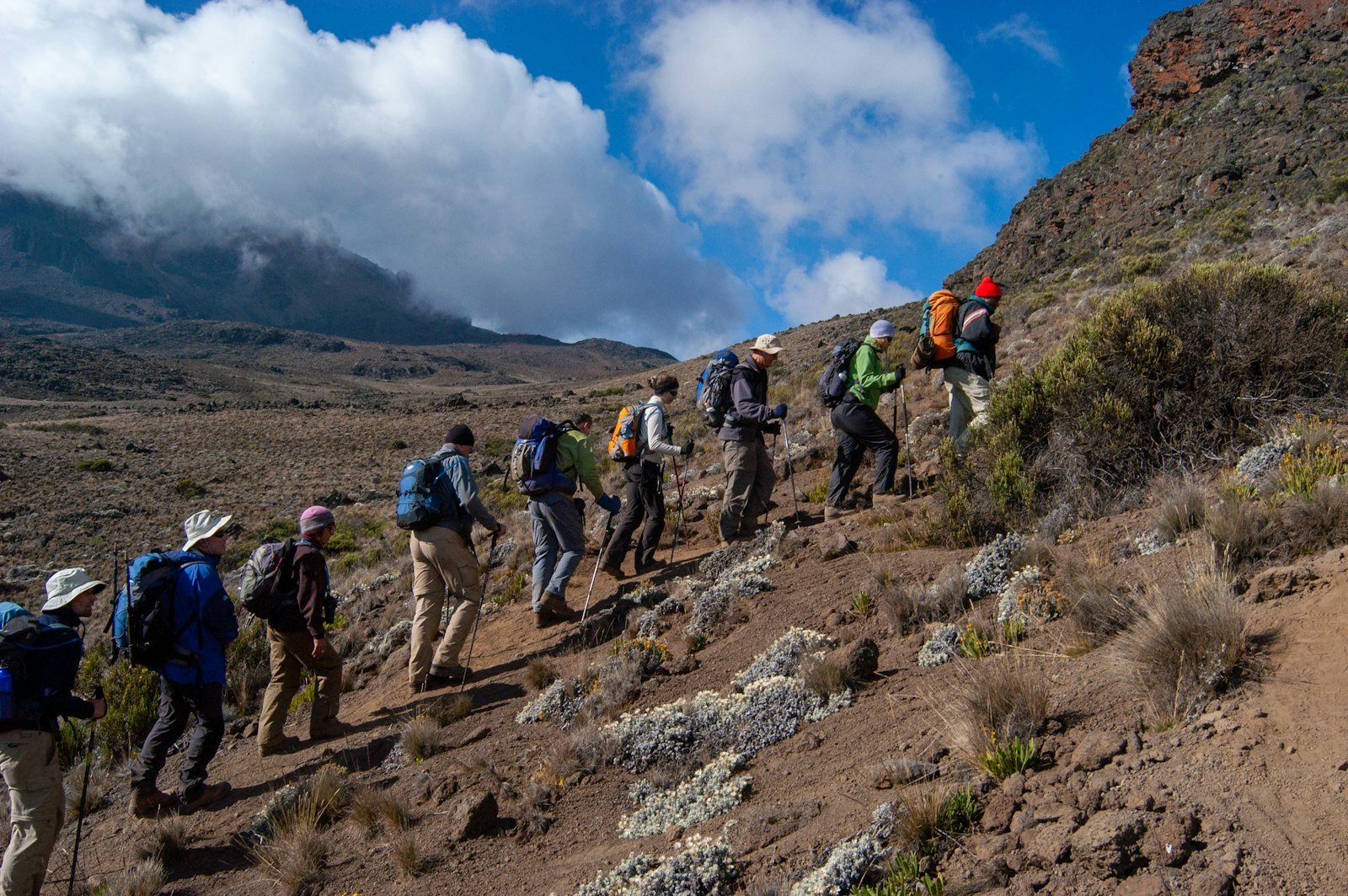 8 days
Lemosho Route
Our favourite: a quiet start in the western forest and the best acclimatisation for its length.
 7 days
Machame Route
The popular, scenic route with a strong climb-high, sleep-low profile.
 6 days
Marangu Route
The only route with huts instead of tents, on a gentle, steady path.
 7 days
Rongai Route
The quiet northern approach, drier than the south side.

The routes compared
| Route | Length | Difficulty | Summit chance | Sleeping | Crowds |
|---|---|---|---|---|---|
| Lemosho Route | 8 days | Moderate | Excellent | Tents | Quiet at first, busier from Lava Tower |
| Machame Route | 7 days | Moderate to challenging | Very good | Tents | Busy |
| Marangu Route | 6 days | Moderate | Good with the extra day | Huts with bunk beds | Busy |
| Rongai Route | 7 days | Moderate | Very good | Tents | Quiet |
| Northern Circuit | 9 days | Moderate | The best of any route | Tents | Very quiet |
A day on Kilimanjaro
- 06:30
Wake-up
Hot tea or coffee brought to your tent, then a cooked breakfast.
- 08:00
Walking
Set off at a slow, steady pace with your guide. Porters pass you carrying the camp.
- 12:30
Lunch
A hot lunch at the next camp or a packed lunch on the trail.
- 15:00
Rest
Arrive at camp to find your tent already up. Rest, wash, or take a short acclimatisation walk.
- 18:30
Dinner
Soup, a hot main course and plenty of fluids, followed by the evening health check and a briefing for tomorrow.
The best time to climb
What to pack
Nights near the summit drop well below freezing, while the first day is warm rainforest. Bring layers. Most gear can be rented in Moshi.
- Waterproof hiking boots, broken in before the trip
- Warm layers: base layers, fleece and a down jacket
- Waterproof jacket and trousers
- Warm hat, gloves and a buff
- Sleeping bag rated to about -10 °C
- Head torch with spare batteries
- Trekking poles
- Sunglasses, sun cream and lip balm
- Water bottles or a hydration bladder (3 litres)
Included in every climb
- Park entry, camping or hut fees and rescue fees
- Certified mountain guides, assistant guides, cook and porters
- Three meals a day on the mountain and treated drinking water
- Quality tents and sleeping mats (camping routes)
- Daily health checks with a pulse oximeter
- Emergency oxygen and first-aid kit
- Airport transfers and hotel nights in Moshi before and after the climb
Not included
- International flights and visas
- Travel insurance covering high-altitude trekking (required)
- Personal gear (rental available)
- Tips for the mountain crew
Then go on safari.
After the climb, rest your legs in the Land Cruiser. Tarangire and the Ngorongoro Crater are a short drive from Moshi, and Ruaha and Nyerere in the south are a short flight away.
Kilimanjaro questions
Do I need climbing experience?
No. Kilimanjaro is a long, high trek. Good fitness and a sensible route length matter far more than climbing experience.
Which route is best?
For most people, Lemosho (8 days) or Machame (7 days). If you prefer huts to tents, choose Marangu with the extra acclimatisation day. For quiet trails, Rongai or the Northern Circuit.
How long does it take?
Between six and nine days on the mountain, plus a night in Moshi before and after. More days mean better acclimatisation and a better chance at the summit.
Is there a minimum age?
Kilimanjaro National Park requires climbers to be at least 10 years old to go to the summit. There is no maximum age; fitness and health matter more.
Who will be on my team?
A lead guide, assistant guides, a cook and porters. Park rules limit how much each porter carries, and we pay our crew fairly and provide proper gear.
What if I feel unwell?
Your guides check your health twice a day and carry oxygen and a first-aid kit. If you show serious signs of altitude sickness, you descend with a guide straight away; going down is the cure.
Can I rent gear?
Yes. Sleeping bags, down jackets, poles and more can be rented in Moshi. Tell us what you need when you book.
Can I combine the climb with a safari?
Yes, and many guests do. A few days in Tarangire, the Serengeti or the Ngorongoro Crater after the climb are the perfect way to rest your legs. Or fly south to Ruaha or Nyerere.
How much should I tip the crew?
Tips are an important part of the crew's income. We send a suggested guideline per crew member with your travel documents.